Email is essential for both personal and professional communication, but it’s also a prime target for cybercriminals. If you've ever wondered how to keep your emails safer from prying eyes, you're not alone. Encryption might sound complicated, but it’s a straightforward way to ensure that your conversations stay private.

This matters because sensitive information—whether it’s personal data, financial details, or confidential work documents—can be intercepted easily if you’re not careful. With simple steps, you can add a layer of security that makes a real difference.
If you're using Outlook for your emails, you're in luck. There are specific methods to encrypt messages that will help keep your information secure. Understanding how to do this not only protects you but also builds trust with those you communicate with.
Core Concepts of Email Encryption
Email encryption protects your messages by converting them into a format unreadable to unauthorized users. This process ensures that only intended recipients can access and read your emails. Here’s a straightforward breakdown of what you need to know:
- Why Encrypt Emails? Email is often a carrier of sensitive information—financial details, personal data, and confidential company communications. Encrypting emails reduces the risk of data breaches and maintains privacy.
- Encryption Protocols The two most common methods are:
- S/MIME (Secure/Multipurpose Internet Mail Extensions) uses a digital certificate to encrypt the email.
- PGP (Pretty Good Privacy) employs a combination of symmetric and asymmetric cryptography to secure the message.
- Email Client Compatibility Not all email clients support encryption protocols. Most major providers like Outlook and Thunderbird offer built-in options for S/MIME and PGP.
- Public and Private Keys In PGP, users have a pair of keys: a public key that can be shared with anyone and a private key kept secret. Only the owner’s private key can decrypt a message encrypted with their public key.
Checklist for Email Encryption
Here’s what you might consider when setting up email encryption:
- Select an Email Client Choose one that supports your preferred encryption method, such as S/MIME or PGP.
- Obtain a Digital Certificate For S/MIME, get a certificate from a trusted Certificate Authority (CA) to validate your identity.
- Install Necessary Software For PGP, you’ll need software like Gpg4win or an extension like Mailvelope for webmail.
- Exchange Public Keys Ensure that you and your recipient share public keys before encrypting emails.
- Train Users Educate yourself and others on the importance of maintaining private keys safely and recognizing encrypted emails.
Benefits and Limitations of Email Encryption
| Benefits | Limitations |
|---|---|
| Enhances privacy and security of sensitive information. | Can be complex for users unfamiliar with encryption methods. |
| Protects data during transmission. | Requires both sender and recipient to have compatible encryption methods. |
| Reduces risk of email interception. | Maintaining key security can be a challenge. |
For a practical approach to encrypting emails specifically in Outlook, refer to the article on how to encrypt email in Outlook. It offers detailed steps tailored to that platform.
Practical Examples of Email Encryption
Using PGP for Enhanced Privacy
Pretty Good Privacy (PGP) employs a combination of symmetric and asymmetric encryption, allowing users to send securely encrypted emails that only intended recipients can read. Users generate a pair of keys—one public and one private—to decrypt and sign messages.
Why this matters: Providing strong privacy protections raises confidence among users that their sensitive communications remain undisclosed, preventing unauthorized access.
Securing Business Communications with S/MIME
Secure/Multipurpose Internet Mail Extensions (S/MIME) is widely utilized in enterprises for encrypting and digitally signing emails. It relies on a hierarchical certificate authority system to authenticate users, enhancing trust in communications.
Why this matters: Highlighting trust through digital signatures reassures clients and colleagues that emails come from verified sources, reducing phishing attempts and identity fraud.
Utilizing Encrypted Email Services
Email services like ProtonMail and Tutanota offer built-in encryption capabilities without requiring additional configuration. These services provide end-to-end encryption, meaning messages are encrypted locally before they reach servers.
Why this matters: Stating the benefits of accessible services encourages individuals to adopt secure methods without needing extensive technical knowledge, thus broadening the user base.
Implementing End-to-End Encryption in Gmail
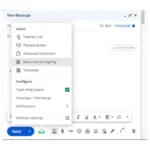
Gmail users can enable encryption through third-party extensions like Mailvelope, which allows for PGP encryption directly within the Gmail interface, ensuring messages are unreadable to interceptors.
Why this matters: By keeping communication secure within a popular platform, users can feel safer while using their existing email habits, promoting wider adoption of encryption practices.
Adopting Secure Email Gateways
Organizations often implement secure email gateways (SEGs) to filter outgoing and incoming messages for sensitive data, applying encryption dynamically based on pre-defined policies.
Why this matters: Asking organizations to invest in SEGs protects sensitive information and mitigates risks associated with data breaches by ensuring compliance and security across email communications.
Leveraging Virtual Private Networks (VPNs) for Email Security
Using a VPN allows users to encrypt their internet connection, providing an additional layer of security when sending emails over public networks. This approach helps prevent eavesdropping on data exchanged in transit.
Why this matters: Highlighting the importance of securing internet connections enhances user understanding that encryption doesn't just apply to emails but also to the environments from which they are sent.
Integrating Email Encryption with Document Security
By pairing encrypted emails with secured documents, users can ensure that attachments remain inaccessible to unauthorized parties. Encryption tools like Adobe Sign encrypt files and emails together, maintaining confidentiality.
Why this matters: Providing a comprehensive security solution highlights the interconnectedness of email and file encryption, reinforcing the message that multiple layers of protection are essential.
Understanding Email Encryption: Key Questions Answered
Why should I encrypt my emails?
Encrypting your emails ensures that only the intended recipient can read the content. This protects sensitive information from unauthorized access, keeping your communications confidential.
What are the best tools for encrypting email?
Popular options include PGP (Pretty Good Privacy), S/MIME (Secure/Multipurpose Internet Mail Extensions), and specific email services with built-in encryption like ProtonMail. Each has its own pros and cons, so choose based on your needs and technical comfort.
Can I encrypt emails on mobile devices?
Yes, many mobile email apps support encryption. Look for apps that integrate with encryption standards like PGP or S/MIME. Ensure that both you and your recipient have compatible setups for effective encryption.
What happens if the recipient doesn't know how to decrypt the email?
If the recipient isn’t equipped to decrypt the email, they won’t be able to read it. It's a good practice to communicate with them beforehand to ensure they have the necessary tools or instructions for accessing encrypted messages.
Protecting your email communications is more important than ever, and encryption is a solid step toward safeguarding your sensitive information from unwanted eyes. The process may seem a bit daunting at first, but with a little patience, you can ensure your emails remain private and secure. Consider giving it a try, and explore options like encrypting your email in Outlook for even more protection. Your personal data is worth that extra effort, so why not start today? You've got this!