Are you worried about the safety of your emails? In an era where personal information is constantly under threat, knowing how to encrypt your Gmail can make a real difference. It’s not just about keeping your messages private; it’s about safeguarding your peace of mind.

Every day, we send sensitive information through email—whether it’s work-related documents or personal conversations. Without encryption, this data can easily fall into the wrong hands, leading to identity theft or serious breaches of privacy.
Many people think encryption is complex or only for those in tech fields, but that’s not the case. In reality, anyone can learn to protect their emails without needing a degree in computer science.
Let’s break down the steps together, so you can feel secure that your conversations remain confidential. No tech jargon here—just straightforward advice that makes sense for everyday folks like you.
Core Elements of Email Encryption in Gmail
Encrypting your email in Gmail enhances the privacy and security of your communications. Here’s a straightforward look at how to achieve this alongside the fundamental concepts involved.
Understanding Encryption
Email encryption transforms your message into a coded format that only the intended recipient can read. It acts as a barrier protecting sensitive information from unauthorized access. The primary encryption methods include:
- S/MIME (Secure/Multipurpose Internet Mail Extensions): Utilizes digital certificates to encrypt emails.
- PGP (Pretty Good Privacy): A method that uses a pair of keys: one public and one private to encrypt and decrypt messages.
Setting Up S/MIME in Gmail
To use S/MIME in Gmail, your organization needs to have a certificate installed on a compatible email client. Follow these steps:
- Obtain a digital certificate from a trusted certificate authority.
- Install the certificate in your email settings.
- Enable S/MIME by navigating to Gmail Settings > Security, and toggling the “Encrypt” option on.
Using PGP for Gmail
For PGP encryption, third-party software or browser extensions can facilitate encryption. Here's how to implement it:
- Install a browser extension like Mailvelope or a dedicated PGP tool.
- Generate your key pair (public and private) using the tool.
- Share your public key with contacts who you wish to communicate with securely.
- Compose and encrypt emails directly within your browser.
Pros and Cons of Email Encryption
| Pros | Cons |
|---|---|
| Enhanced Security: Protects sensitive information from hacking and unauthorized access. | Complex Setup: May require technical knowledge to configure correctly. |
| Privacy: Only the intended recipient can access the content. | Compatibility Issues: The recipient needs to have the necessary encryption setup. |
| Compliance: Helps meet legal and regulatory requirements for data protection. | Potential Loss of Access: Losing your private key can result in permanent loss of access to encrypted messages. |
Understanding how email encryption works in Gmail not only secures your messages but also raises awareness about data protection practices. For additional insights into email safety, explore our article on how to identify and manage suspicious emails from scammers.
Practical Examples of Email Encryption in Gmail
Utilizing Built-in Gmail Confidential Mode
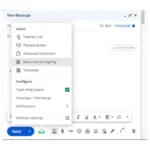
Gmail offers a Confidential Mode, allowing users to send messages that expire after a specified time. Recipients cannot forward, copy, print, or download these emails.
Why this matters: Stating the simplicity of enabling this feature, users can enhance privacy and ensure sensitive information doesn’t linger longer than necessary.
Implementing S/MIME for Enhanced Security
Secure/Multipurpose Internet Mail Extensions (S/MIME) provides end-to-end email encryption when both sender and recipient have it enabled, ensuring that only the intended recipient can decrypt the message.
Why this matters: Highlighting the security this method offers, organizations can safeguard confidential communication against unauthorized access.
Using Third-Party Encryption Tools
Tools like Virtru and FlowCrypt integrate with Gmail, adding encryption capabilities and control over email access and expiration, which can be valuable for individuals and businesses.
Why this matters: Providing additional layers of security, these tools empower users to manage how their sensitive data is shared and accessed.
Encrypting Attachments Directly
Before sending attachments via Gmail, users can encrypt files with password protection. This ensures that the content remains hidden unless the recipient has the password.
Why this matters: Asking for careful management of sensitive documents, this method provides a reliable way to protect crucial information during transmission.
Two-Factor Authentication for Gmail Accounts
Enabling two-factor authentication (2FA) adds an extra layer of security to Gmail accounts, requiring users to provide a second form of verification along with their password.
Why this matters: By keeping accounts secure through 2FA, users reduce the likelihood of unauthorized access to their encrypted emails and information.
Educating Recipients on Email Encryption
Sharing knowledge about how to use encryption with recipients ensures everyone involved in communication understands encryption tools, fostering a secure exchange.
Why this matters: Providing education on these tools can enhance collective security practices, ensuring that sensitive information remains protected across all communications.
Verifying Digital Signatures
Emails sent with a digital signature allow recipients to verify the sender’s identity. This process ensures that the email has not been tampered with and is from a legitimate source.
Why this matters: Highlighting the importance of authenticity, this verification process fortifies trust in email communications, particularly when sensitive information is involved.
Encrypting Your Gmail: Answers to Common Queries
How can I encrypt emails sent from my Gmail account?
You can encrypt emails in Gmail by using S/MIME (Secure/Multipurpose Internet Mail Extensions) if both you and the recipient have a compatible setup. This involves obtaining a digital certificate from a trusted certificate authority, which you then install in your Gmail settings. Once set up, emails sent to others with S/MIME will be encrypted automatically.
What is the difference between S/MIME and PGP for encrypting emails?
S/MIME is built into Gmail and uses a centralized approach with digital certificates, making it user-friendly for corporate environments. PGP (Pretty Good Privacy), on the other hand, is more decentralized and allows users to manage their own keys. Both methods offer robust encryption but differ in user control and setup complexity.
Are there any browser extensions I can use to encrypt my Gmail emails?
Yes, several browser extensions can help with Gmail encryption, such as Mailvelope and FlowCrypt. These tools integrate with Gmail, allowing you to send and receive encrypted emails using PGP. They provide an easier setup for users who may not want to deal with certificates.
What security measures should I take in addition to email encryption?
Besides encryption, consider using two-factor authentication for your Google account, regularly updating your password, and being cautious with email attachments and links. Keeping your software up-to-date also helps protect against vulnerabilities that could be exploited by attackers.
Keeping your emails secure is more important than ever, especially with the increasing threats we face online. By embracing encryption in Gmail, you’re not just protecting your private conversations but also taking a stand for your digital safety. It might seem a bit daunting at first, but once you get the hang of it, you’ll feel much more at ease knowing your sensitive information is shielded from prying eyes. So go ahead, give it a try! Your peace of mind is worth it.